
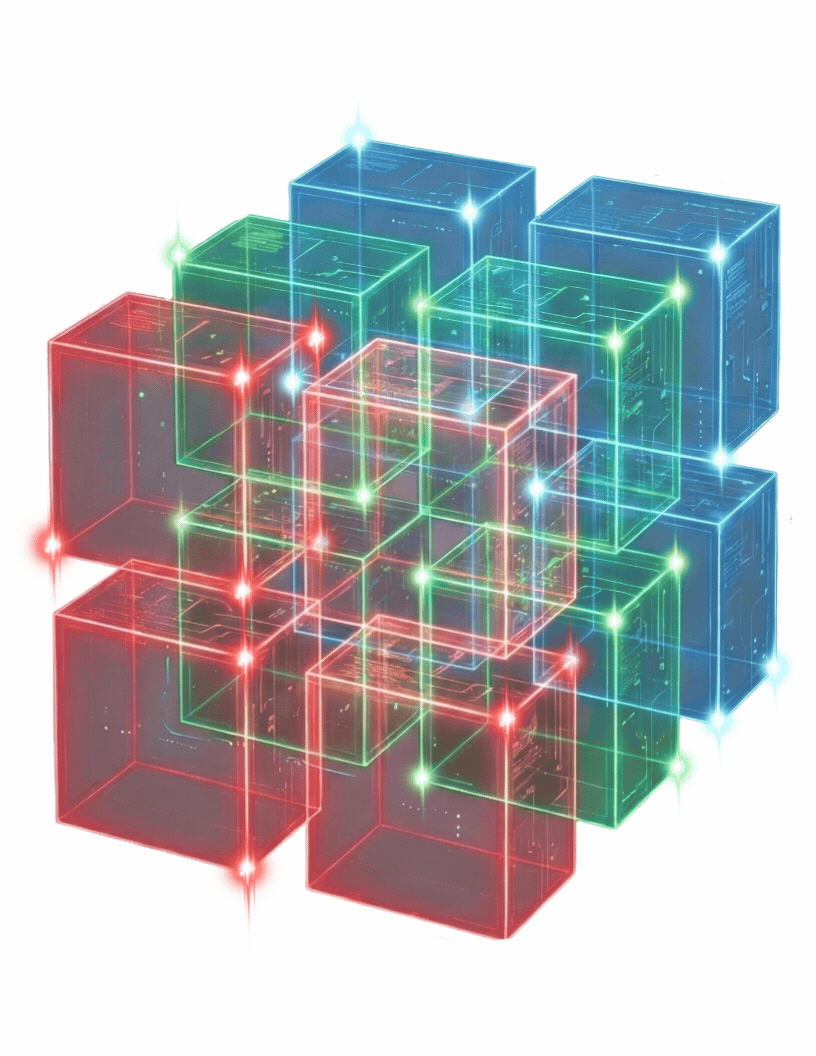
SPATIALGRID OS
INTERFACE. INTELLIGENCE. INFRASTRUCTURE.
The operating system for interactive broadcast
ONE LIVE FEED.
UP TO 255 VIEWER-NAVIGABLE NODES
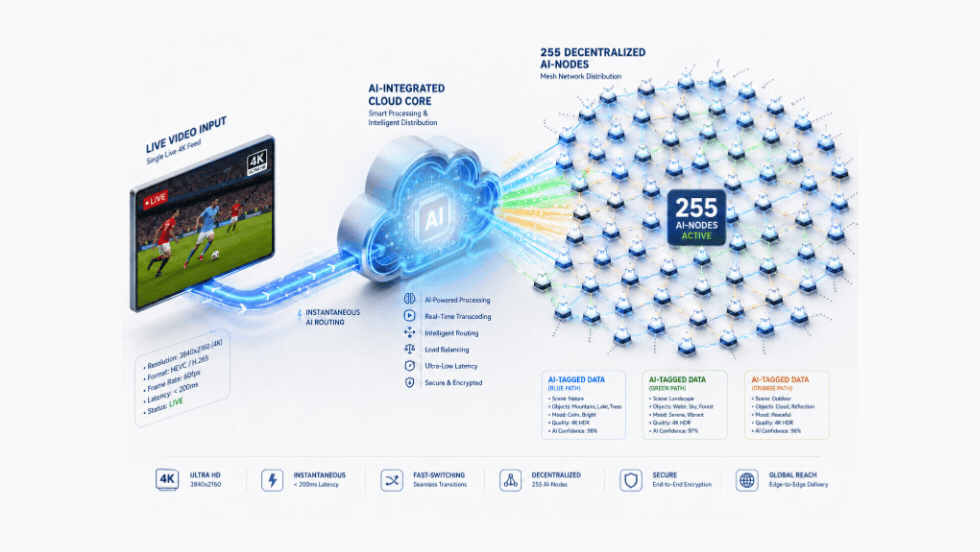
One live feed in. Up to 255 viewer-navigable nodes out.
Sub-100ms switching, AI-tagged in real time, fully cloud-native.
I
WHAT SPATIAL OS DOES
Spatial OS transforms a single live broadcast into a viewer-navigable grid of up to 255 interactive nodes. Each node can carry its own camera angle, statistic, replay, commerce link, betting line, or data event. The viewer swipes through the grid like a Netflix tile layout — except every tile is a different slice of the same live event, and every tile is transactable.

ARCHITECTURE PROTECTED. 3 GRANTED U.S. PATENTS.
The architecture is protected by three granted U.S. patents:
US 7,669,128 INTERFACE
Grid-based program selection and sub-100ms switching between parallel synchronized media feeds.
US 9,177,603 INTELLIGENCE
Embedding real-time interactive and transactional metadata into spatial zones of a video timeline.
US 12,356,047 INFRASTRUCTURE
Multi-axis matrix architecture for concurrent video node delivery.
II
THE SPATIAL OS CONTROL CENTER
The Media Control System interface depicted in the image directly below embodies the method claimed in:
2003 CLAIM 1 of US 7,669,128 B2, which covers a method of enhancing a viewer's experience by presenting
pre-rendered video. Scenes as selectable elements within a multiple-column-by-multiple-row navigation grid.
In the image below, the "SPATIALGRID OS MULTIVIEW" display organizes
18 live athlete-specific feeds into precisely such a grid structure:


SPATIAL OS MULTI-VIEW DISPLAY FEATURES
Each row represents a sub-chapter common to all columns and each column represents a distinct chapter.
The rows group by athlete (Mbappé, Kane, Messi, Haaland, Yamal/Vinícius), functioning as the sub-chapters, while the columns present distinct goal moments or event types:
(Goal 1, Goal 2, Goal 3, Highlights) as the chapter-level selections — each tile numbered and labeled
as a discrete, selectable node.
REAL-TIME META DATA AND AI TAGGING
The right-hand panel's real-time metadata, AI Tags, and Feed Info confirm that each node is a live, pre-rendered feed delivered to the display, and the "SYNC" and view-mode controls correspond to the claim's step of prompting user selection and loading a modified playback of the program based on those selections.

Taken together, the interface illustrates a live-broadcast implementation of the patented navigation grid architecture: a viewer navigating this screen — selecting a specific athlete's goal moment from the matrix — performs the exact method of selecting from a grid of alternative program scenes that the '128 patent protects.

III
WHY IT MATTERS

IV
HOW IT WORKS
Spatial OS transforms a single live broadcast into a viewer-navigable grid of up to 255 interactive nodes. Each node can carry its own camera angle, statistic, replay, commerce link, betting line, or data event. The viewer swipes through the grid like a Netflix tile layout — except every tile is a different slice of the same live event, and every tile is transactable.

INGEST THE BROADCAST
Spatial OS accepts your existing live broadcast (RTMP or SRT). No camera, switcher, or production team changes required.

TAG BROADCAST WITH AI
Multimodal AI (Gemini via Vertex AI, deployed through Zazmic) identifies players, products, plays, emotions, and on-screen objects in real time at 94% accuracy.

SHARD THE BROADCAST INTO THE GRID
The single broadcast is fragmented into up to 255 parallel nodes, each carrying its own URL, ad slot, bet line, commerce SKU, or premium camera angle.

RENDER BROADCAST TO THE VIEWER
On any device.
CTV, mobile, or web, the viewer navigates with swipes or remote inputs.
Sub-100ms switching makes the experience feel native, not menu-driven.

V
FOR BROADCASTERS
Three layered revenue streams running simultaneously on the same viewer-minute.

Plus granular analytics on rewatch rates, skip behavior, and commerce conversion.
Plus sponsor activation tied to specific moments —
A logo on the game-winning shot, an ad inserted at the goal, a coupon offered at the buzzer.

VI
FOR VIEWERS
The Grid stays invisible until the viewer wants it.
When they do, everything just works.

VII
SOLID FOUNDATION BUILD
Cloud-native by design. Deployed against the production stack that matters in 2026.

VIII
BEYOND SPORTS
Sports is the lead category. The architecture extends anywhere a video stream needs to become a transactable, searchable surface.
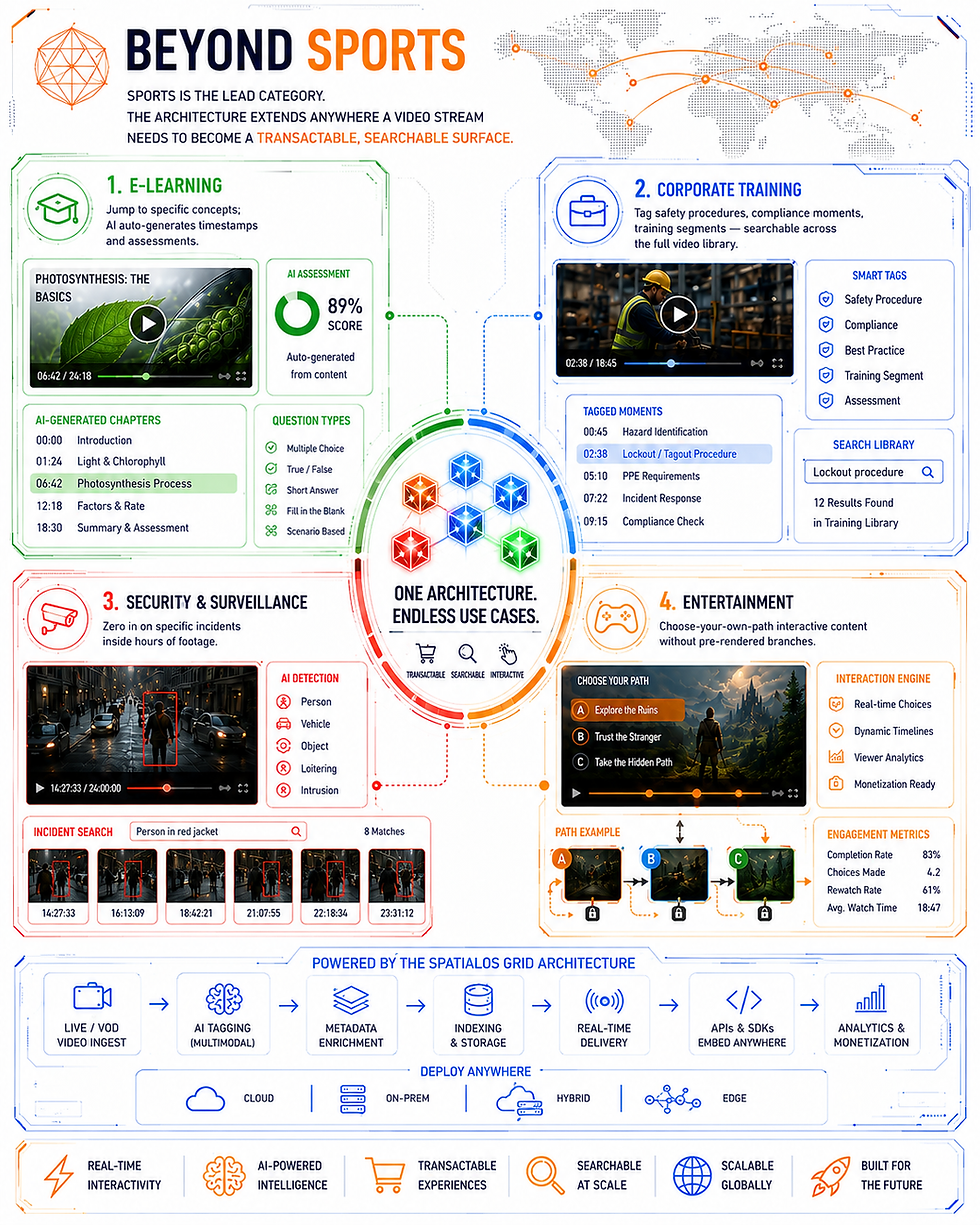
One Architecture. Endless use cases.
IX
THE PROOF
INTERFACE. INTELLIGENCE. INFRASTRUCTURE.

X
THE SPATIALGRID OS TIMELINE
2007 TO PRESENT DAY


Unveiling the Magic of SPATIAL OS
At its core, SPATIAL OS is a paradigm shift: we turn every linear video—whether it’s the final seconds of a championship game, a deep-dive documentary, or a corporate training module—into an immersive, interactive experience. No longer must viewers passively scrub through timelines or scroll endlessly; instead, they’re handed a powerful, AI-driven navigation grid that lets them explore content on their terms.